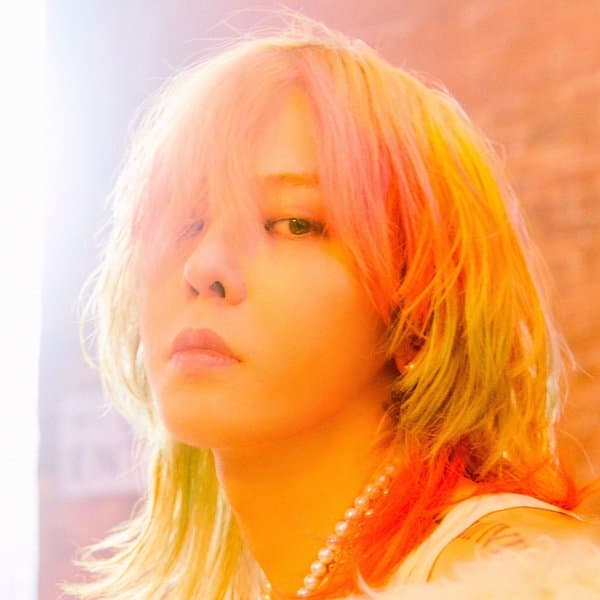
G-DRAGON (지드래곤)
Real name: Kwon Ji Yong
Few artists in the K-pop landscape have shaped the genre's creative direction as consistently as G-DRAGON. As the leader and main rapper of BIGBANG — one of the most commercially dominant Korean acts of the 2000s and 2010s — Kwon Ji Yong built a reputation not merely as a performer but as a songwriter and producer whose fingerprints run through a substantial portion of the group's catalog. His solo work extended that influence further, establishing him as a singular presence in Korean pop music who operated at the intersection of hip-hop, pop, and high fashion.
Debut and Formation
Kwon Ji Yong was born in Seoul on August 18, 1988, and entered the Korean entertainment industry at a young age, training under YG Entertainment before debuting as a member of BIGBANG in 2006. The group, which also included TAEYANG, T.O.P, DAESUNG, and SEUNGRI, became one of YG's most successful acts and a foundational force in the global spread of K-pop. From early in the group's run, G-DRAGON took on the role of primary creative driver, contributing heavily to BIGBANG's songwriting and production — a relatively uncommon arrangement within the idol system of that era.
His position in the group extended beyond music. Designated as BIGBANG's leader and face, he became the member most associated with the group's public identity, a role reinforced by a fashion sensibility that attracted attention from luxury houses and international press.
Music and Discography
G-DRAGON launched his solo career in 2009 with the mini-album *Heartbreaker*, which drew both commercial success and some controversy over production credits — a moment that, regardless of the surrounding debate, demonstrated the appetite for his work outside the BIGBANG framework. His second solo effort, *One of a Kind* (2012), and the full-length *Coup d'Etat* (2013) developed his solo voice further, drawing on trap, electronic, and alternative pop influences at a time when Korean pop's international profile was rapidly expanding.
His collaborative unit with fellow BIGBANG member TAEYANG, GD X TAEYANG, produced the 2014 single "Good Boy," which performed strongly on Korean charts and added another dimension to his discography beyond both his solo work and the main group. Earlier in his career, he also appeared as part of HwangTaeJi, a unit that represented a formative stage before his prominence with BIGBANG was fully established.
Across his catalog, G-DRAGON's work is characterized by an ease with genre-blending — moving between Korean hip-hop, synth-driven pop, and R&B — combined with a lyrical directness that distinguished him from many contemporaries in the idol space. His willingness to write about personal experience, industry pressures, and self-image gave his material a texture that resonated with listeners beyond the core K-pop audience.
Following BIGBANG's extended hiatus — shaped in part by the mandatory military service requirements applied to all Korean male artists — G-DRAGON discharged from the military and returned to activity. His return was accompanied by renewed public and industry attention, reflecting the sustained regard for his work during the intervening years.
Achievements
BIGBANG's commercial record across their active years included multiple chart-topping releases on the Gaon Chart and consistent presence on Billboard's World Albums and World Digital Songs charts. G-DRAGON's solo releases performed comparably, with *Coup d'Etat* charting in several Asian markets and drawing streaming figures that underlined his draw as an independent act.
His influence extended into brand partnerships and fashion, with associations including Chanel and Nike's PEACEMINUSONE line — the latter a brand he founded — marking him as one of the few Korean pop artists to develop a credible independent commercial identity in the fashion sector.
Activities
In the period following his military discharge, G-DRAGON has maintained a visible public profile. His selection of beatboxer Wing to collaborate on the track "Dopamine" — which accumulated 45 million views — demonstrated continued engagement with emerging talent and an ongoing curatorial instinct. The track's reach and Wing's subsequent media appearances referencing G-DRAGON's involvement reflected the weight that association with him still carries in the Korean entertainment industry.
His presence continues to register in Korean media coverage, whether through industry figures referencing his commentary or peers recounting interactions with him, suggesting a standing within the industry that operates somewhat independently of release cycles.
Legacy
G-DRAGON occupies a particular position in K-pop's development: an artist who arrived within the idol system but consistently pushed against its creative constraints, functioning as a producer and writer in ways that influenced how the industry regarded artist autonomy. The generation of artists who followed BIGBANG's mid-2000s to mid-2010s peak grew up with G-DRAGON as a reference point for what a Korean pop artist could be — commercially successful, creatively credible, and internationally visible before that combination was routine. His continued relevance in Korean cultural conversation, well over a decade after his debut, reflects the durability of that foundation.
PROFILE INFO
Birthday
Aug 18, 1988
Gender
Male
Nationality
Korean
Birthplace
Seoul, South Korea
Height
177 cm
Weight
58 kg
Blood type
A
MBTI
ENTP
Zodiac
♌ Leo
GROUPS
Cheers
Anyone can leave a message — no login needed. Please keep it kind 💜
Loading…