"K-POP Destroyed Me": Former "I-LAND" Contestant Kyu Opens Up About Entering the Industry at 14
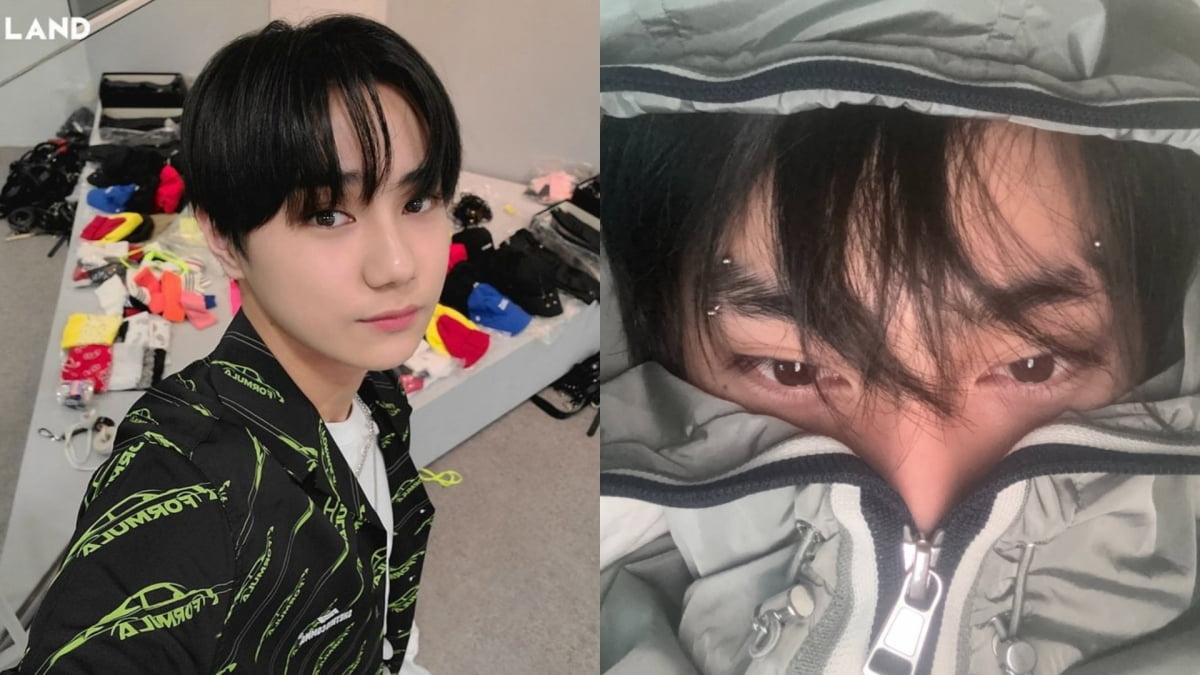
Former "I-LAND" contestant Daniel Kim, now active as solo artist under the name of Kyu, has opened up about the lasting impact of participating in the K-POP survival show at just 14 years old, describing panic, isolation and the difficulty of returning to ordinary life after suddenly being exposed to the public.
Kyu appeared on Mnet's "I-LAND" in 2020 as its youngest contestant. Born in March 2006, he was 14 when the program aired and had already spent around a year training before joining the competition. He ultimately advanced to the final episode but did not make the seven-member lineup that would later become ENHYPEN.
In a video recently uploaded to his Instagram, Kyu reflected on the experience six years later, beginning with a striking statement: "K-POP destroyed me."
"I was 13, 14 years old at the time I was on the show. I feel like that's where I first learned about life," he said, explaining that he originally entered the program because he wanted to become famous and pursue a career as a singer.
However, he said the experience ultimately left him with trauma. According to Kyu, contestants remained inside the studio for three months and he was unable to contact his parents during that period.
He also recalled suffering what he described as a panic attack while in a practice room, saying the constant presence of cameras contributed to the pressure he felt. "My body just froze up and I didn't know why, but I was crying," he recalled, explaining that he ran into a closet to hide.
It was there that, according to Kyu, a member of the production staff found him, hugged him and told him, "어른들이 미안해," which he translated as an apology from the adults around him.
"That really helped me a lot," Kyu said. "No adult had ever talked to me like that."
The competitive nature of the program also proved difficult for someone of his age. Kyu recalled facing hostility and comments involving his parents, something he now views differently as a 20-year-old looking back at himself as a middle-school-aged contestant.
"I was still the youngest and way too young. I was a kid," he said.
While "I-LAND" was built around an unusually immersive environment, its constant observation was also part of its public concept. The program offered "I-LAND Cam" footage that allowed viewers to watch additional multi-camera footage of contestants inside the I-LAND and Ground facilities beyond what appeared in regular episodes.
For Kyu, however, the pressure did not necessarily end when filming did as after reaching the finale and being eliminated, he returned to school to find that the life he had known before the program had changed. Classmates knew who he was, while strangers approached him for photographs on the street.
"It was too much for me at the time," he said. Importantly, Kyu has indicated in his caption that the video is only the first part of his story, meaning the account currently available does not represent everything he intends to say about his experiences.
With further videos still expected, his reflections could provide a deeper look into what happens to young trainees not only while competing for a debut opportunity, but after that opportunity disappears.
His story also raises a broader question that has followed K-POP as debut ages continue to fall: how young is too young for the pressures that come with becoming an idol?
There are understandable business reasons behind companies beginning the training process early. Developing vocals, dance, language skills and performance experience can take years, while factors including contract cycles, group longevity and, for Korean male artists, eventual mandatory military service can influence how companies plan an artist's career.
From an industry perspective, debuting younger can provide more time to develop an artist and maximize the comparatively limited window of a group's initial contract.Yet understanding the business logic does not remove the responsibility that comes with placing children inside that system.
Survival programs create an especially complicated environment. Contestants are not simply training; they are training while being filmed, evaluated, ranked, criticized and eventually eliminated in front of potentially millions of viewers.
For minors, the transition can be particularly extreme as a teenager can enter a program as an unknown trainee, gain a global following within weeks and then, after elimination, be expected to return to school or ordinary trainee life carrying a level of public recognition they may never have been prepared to manage.
Therefore, the industry therefore cannot just prepare young trainees to debut, they must also consider how to support them when they do not. Mental health resources, regular access to guardians, post-show counseling and structured support following elimination could become as important as vocal or dance training when minors participate in high-pressure programs.
Similar support should remain relevant even for those who successfully debut, as debut does not erase the effects of years spent competing and training during formative stages of childhood.
Kyu's experience should not automatically be treated as representative of every contestant or every K-POP trainee. It is one person's account of what happened to him, and his full story has yet to be told. However that distinction does not make the questions it raises any less important.
As more children enter training systems and survival programs with hopes of becoming the industry's next stars, equal attention may need to be placed on developing systems capable of protecting the child behind that talent, including when the cameras stop rolling.
Comments (0)
Loading comments…