Trick or Treat? TXT, ENHYPEN and Red Velvet's Darkest K-POP Stories
From ENHYPEN's vampires to TXT's fractured friendships, K-POP's darkest music videos reveal that the most unsettling stories are often rooted in human emotions.
Every October, Halloween brings familiar images of vampires, ghosts, witches and other supernatural creatures back into the spotlight. However, in K-POP, these figures have long existed beyond the holiday, appearing in music videos and elaborate fictional universes that explore far more than the fear traditionally associated with horror.
While K-POP is often recognized for its colorful visuals, intricate choreography and polished performances, some of its most memorable concepts embrace a much darker side. Behind the unsettling imagery, however, the real focus is not always the supernatural itself. Instead, horror becomes a way of portraying emotions that are difficult to express directly, from desire and obsession to loneliness, betrayal and the fear of losing someone.
For groups such as ENHYPEN, TOMORROW X TOGETHER and Red Velvet, horror is not simply an aesthetic choice. Each has used familiar elements of the genre to construct narratives in which the most frightening experiences are often deeply human.
Perhaps one of the clearest examples is ENHYPEN, whose artistic identity has been closely associated with vampires since the group's early releases. Rather than presenting these supernatural beings solely as dangerous creatures, ENHYPEN has repeatedly used vampirism to explore the relationship between desire, fate and emotional attachment.
This approach became particularly prominent in the group's 2023 mini-album "DARK BLOOD" and its title track "Bite Me." Within the album's narrative, blood represents a connection between two individuals bound together by fate. The vampire's bite, traditionally associated with danger and the loss of control, becomes an expression of devotion and a willingness to sacrifice oneself for another person.
The music video reinforces this interpretation through its gothic atmosphere, restrained performances and choreography that emphasizes the relationship between the members and their female dance partners. Rather than relying on graphic horror, the visual presentation creates tension through proximity, movement and the suggestion of an inescapable bond.
What makes ENHYPEN's interpretation particularly interesting is the way it reverses the traditional relationship between a predator and its victim. The vampire, usually portrayed as the figure who takes, becomes someone willing to surrender something of himself. The supernatural threat is transformed into a metaphor for vulnerability, where loving someone means accepting the possibility of losing control.
The group's vampire mythology also extends beyond a single release, allowing these themes to develop across different chapters of its discography. In this context, horror becomes more than a visual concept. It provides a framework through which ENHYPEN can repeatedly revisit desire, sacrifice and emotional dependence without telling the same story in exactly the same way.
However, K-POP does not always need supernatural creatures to create an unsettling atmosphere. Sometimes, the most disturbing images emerge from situations that initially appear completely ordinary.
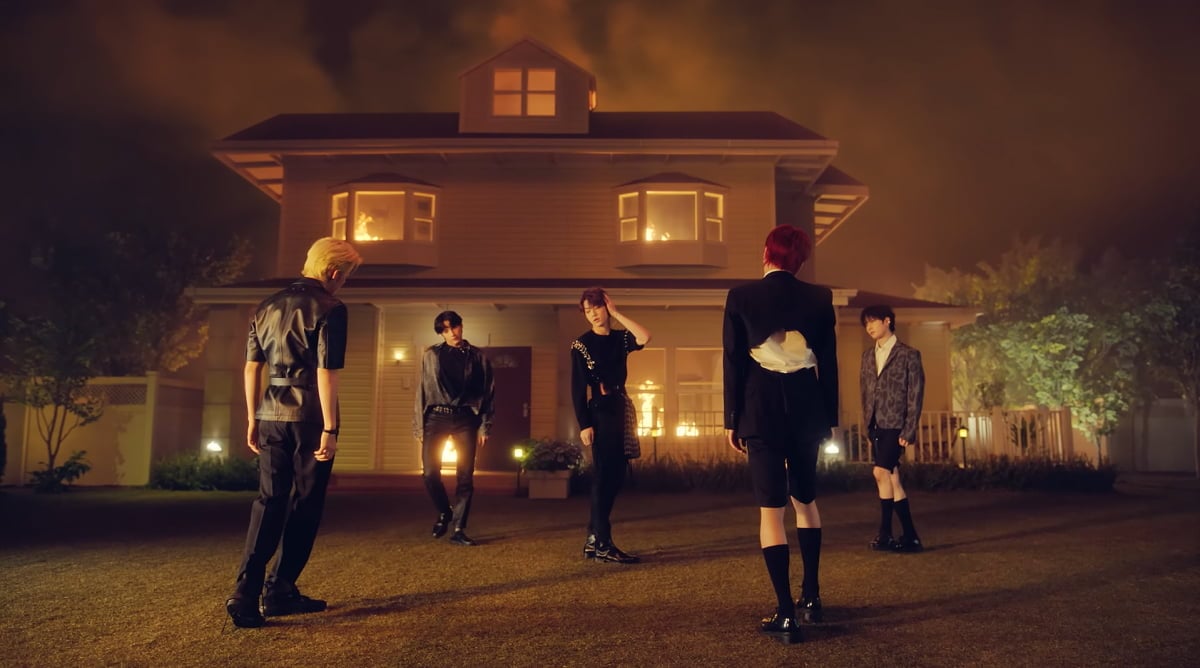
TXT's 2020 music video for "Can't You See Me?" takes this approach by transforming what begins as a seemingly innocent gathering between friends into a story filled with tension, confusion and emotional isolation.
At first, the members are shown spending time together inside a house, surrounded by familiar domestic settings and playful interactions. Yet as the video progresses, the atmosphere becomes increasingly uncomfortable. Small disagreements and seemingly harmless actions begin to carry darker implications, while the imagery gradually shifts from lighthearted to destructive.
The use of bright red strawberries and tomatoes, combined with scenes of fire and the deterioration of the house, creates a visual contrast between innocence and violence. What initially resembles an ordinary gathering becomes something closer to a psychological nightmare.
Unlike ENHYPEN's vampires, TXT's source of horror is not an external creature or supernatural force. It is the breakdown of trust between people who were once close.
Released as the title track of "The Dream Chapter: ETERNITY," the song explores loneliness, confusion and the emotional consequences of fractured friendships. The burning house becomes a particularly effective metaphor for this conflict, turning a place associated with comfort and safety into a representation of relationships falling apart.
The video also captures a recognizable experience of adolescence: the realization that even close friendships can become complicated, and that feeling misunderstood by people who once knew you well can be deeply isolating.
By exaggerating these emotions through disturbing imagery, TXT transforms an ordinary human experience into something that resembles horror. There are no conventional monsters to defeat, because the real threat is the possibility that a once-meaningful connection may no longer be recoverable.
Red Velvet, meanwhile, demonstrates how horror can become even more unsettling when it is presented alongside playful music and seemingly cheerful imagery.
Released in 2017, Red Velvet's "Peek-A-Boo" music video follows the five members as they lure a pizza delivery worker into their mysterious house. What initially appears to be a playful encounter takes a sinister turn as the members engage in strange rituals, handle weapons and treat the delivery worker as part of their entertainment.
As he realizes the danger he is in, he attempts to escape, while photographs of other delivery workers suggest he may not be their first victim. Yet throughout the increasingly disturbing events, the song maintains its upbeat production, and the members continue smiling and behaving as though nothing unusual is happening.
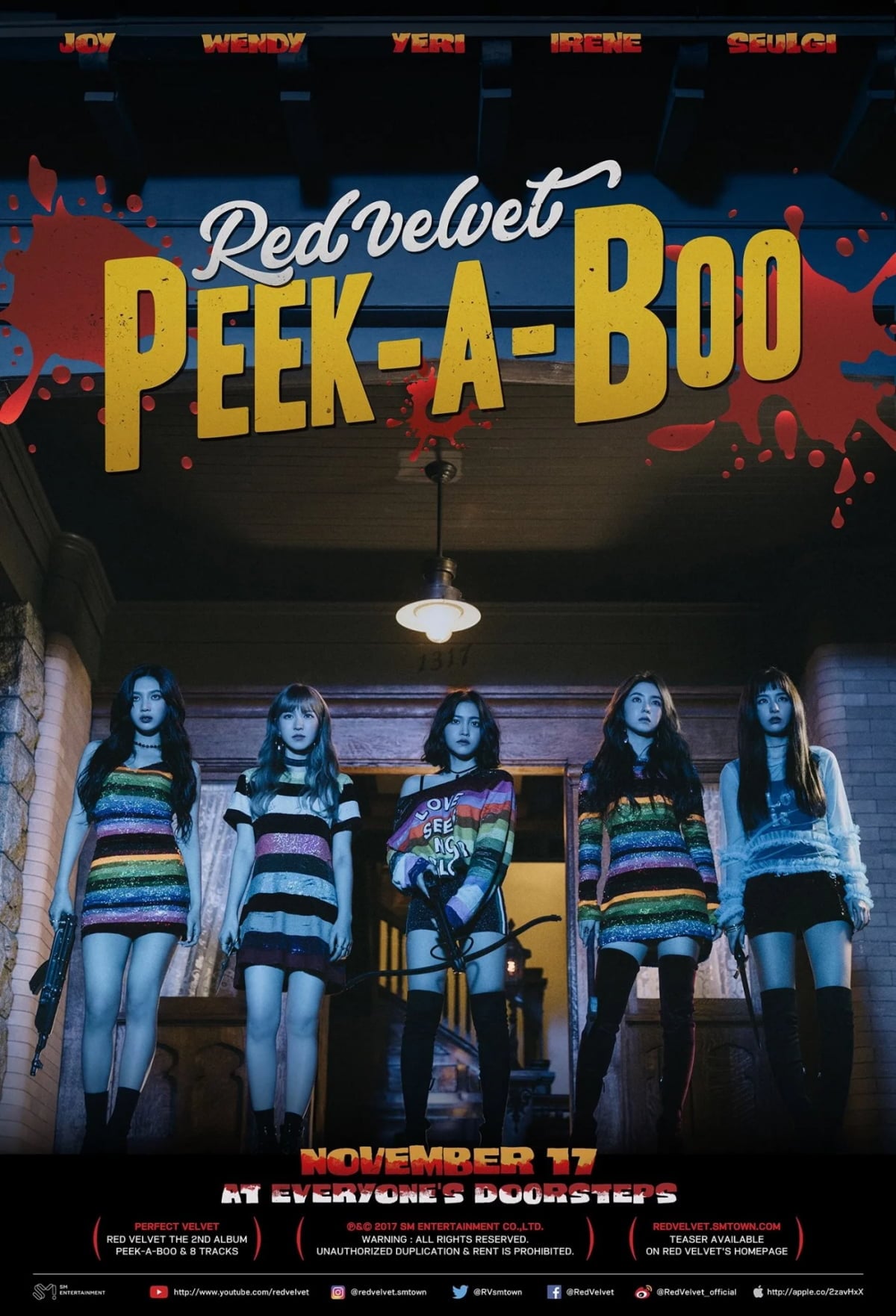
Rather than relying on a traditionally frightening atmosphere, "Peek-A-Boo" uses cheerful music and playful imagery to conceal a darker narrative. This contrast between innocent appearances and sinister intentions becomes the video's defining feature, demonstrating how Red Velvet turns familiar pop aesthetics into something unsettling.
While ENHYPEN uses horror to explore devotion and TXT uses it to communicate emotional isolation, Red Velvet approaches the genre through deception and the unsettling relationship between appearances and intentions.
The result is a different kind of discomfort. Rather than encouraging viewers to identify with a vulnerable character's emotions, "Peek-A-Boo" places them in a world where playful behavior conceals danger, leaving them uncertain about what should be considered harmless.
Although these three examples differ significantly in musical style and narrative approach, they share an important characteristic: the horror elements are closely connected to the emotions or relationships at the center of their stories.
These examples also demonstrate why horror can be particularly effective within K-POP's visual storytelling. Music videos have limited time to establish characters, introduce conflict and communicate emotional stakes. Recognizable horror imagery can convey those ideas almost immediately, allowing viewers to understand that something is wrong before the narrative fully explains why.
So ultimately, what makes these darker K-POP concepts compelling is not necessarily their ability to frighten viewers, but their ability to make familiar emotions appear unfamiliar.
Halloween may be the season most closely associated with monsters and nightmares, but K-POP's use of horror suggests that sometimes, the real source of fear is the possibility of losing someone, being misunderstood or discovering that something seemingly innocent was never what it appeared to be.
Comments (0)
Loading comments…